When Tracking Takes Over: The Case for Collecting Without a Spreadsheet
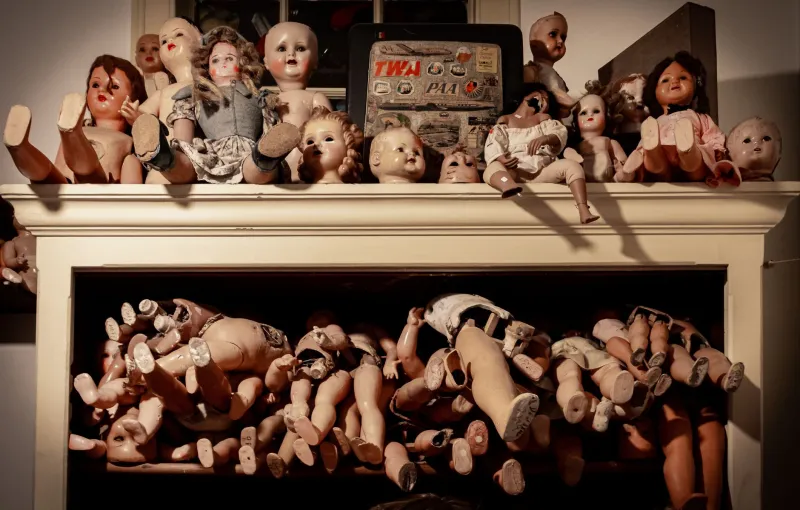
There's a certain kind of collector who knows exactly what they own. Not just the doll — the year, the mold number, the original retail price, the condition grade, the purchase date, the seller's username, the estimated current value, and the last time they photographed it against a neutral background for documentation purposes.
That collector might be you. And if it is, we have a gentle question: when's the last time you just looked at your dolls?
The Spreadsheet as Status Symbol
Somewhere along the way, detailed collection tracking became a badge of seriousness in the doll community. And honestly? There are good reasons for it. Proper documentation helps with insurance claims. It keeps trades honest. It makes estate planning easier. It lets you spot gaps in a line you're building out.
But for a lot of collectors — particularly those who came up through online communities where sharing your spreadsheet was practically a rite of passage — the tracking system quietly shifted from tool to identity. The data wasn't just about the collection. It was the collection, in some weird way.
"I had a 47-column spreadsheet," says Renata, a collector based in Portland who focuses on vintage Barbie and her friends. "I'm not exaggerating. Forty-seven columns. I had a column for whether the original rubber band was still in the hair. A column for whether the box smell was 'strong,' 'faint,' or 'neutral.' At some point I was spending more time updating the sheet than I was actually hunting for dolls."
She's not alone. On collector forums and Discord servers, there's a growing undercurrent of people quietly admitting that their documentation habits had started to feel more like obligation than joy.
What Gets Lost in the Data Entry
Here's a thing that doesn't show up in any spreadsheet: the feeling of walking past your shelf and noticing the way afternoon light hits a particular doll's hair. The random Tuesday when you pick up a piece you haven't touched in months and remember exactly why you chased it for two years.
Collecting has always had an emotional dimension that resists quantification. The problem is that heavy data culture can accidentally train collectors to experience their hobby through an analytical lens even when they're not actively tracking anything.
Marcos, a customizer and collector in Chicago who works primarily with Monster High and OOAK pieces, describes it this way: "I started grading my own enjoyment of pieces. Like, 'this one's an 8 out of 10 for me, sentiment-wise.' I didn't even have a column for that — it was just happening in my head. That's when I realized the spreadsheet had gotten inside me."
He eventually stripped his tracking system down to three fields: what he owns, what he paid, and whether he'd sell it. Everything else got deleted.
"I thought I'd feel anxious without all that data. Instead I felt lighter. I started noticing things about my collection I'd stopped seeing."
The Metadata That Actually Matters
This isn't an argument against documentation. It's an argument for being intentional about why you're documenting.
There's a real difference between data that serves your collection and data that performs seriousness. The first kind helps you make decisions — buying, selling, trading, insuring, displaying. The second kind just makes your tracking system look impressively thorough.
Ask yourself: when did you last actually use a specific data point you're tracking? If the answer is never, or "I guess I'd use it if I needed to prove something," that column might be earning its existence through anxiety rather than utility.
Some collectors have found a middle path — what you might call a "minimum viable record." Purchase price and approximate condition for insurance purposes. A photo or two. A note if there's something genuinely unusual about the piece. That's it. Everything beyond that is optional, and opting out is allowed.
Lena, a doll room veteran in Nashville who's been collecting for over 20 years, put it simply: "The old-timers I learned from kept their records in a little notebook. One line per doll. They knew their collections better than anyone I've met since, because they were in their collections, not managing them."
Burnout Looks Like This
Collector burnout is real, and it doesn't always announce itself dramatically. Sometimes it's just a slow drift where you stop getting excited about finds, stop engaging with the community, stop feeling that specific buzz when something you've been hunting finally shows up at an estate sale.
For some people, the spreadsheet is a symptom, not the cause. But for others, the maintenance burden of elaborate tracking systems is genuinely eroding the fun. If logging a new acquisition feels like a chore before you've even had a chance to enjoy it, something's off.
It's worth separating the question of what data is useful from what data makes you feel like a legitimate, serious collector. The community can inadvertently create pressure to document at a level that makes sense for dealers or museum archivists but is overkill for someone who just really loves dolls and wants to keep loving them.
Permission to Simplify
If you're reading this and feeling a low-grade guilt about your own tracking habits — either because you've let them slip, or because you've been white-knuckling an elaborate system you don't actually enjoy — consider this your permission slip to simplify.
Your collection doesn't need to be a database to be valid. The dolls don't care about their condition grades. The joy you get from them doesn't appear in any column.
Renata, who deleted 44 of her 47 columns, reports that her collection feels different now. Not less serious — different. "I know my dolls better. I handle them more. I actually look at them instead of looking at data about them. It sounds obvious when I say it out loud, but it took me years to get there."
The spreadsheet was always supposed to serve the collection. Not the other way around.
If yours has flipped the script, it might be time to do a little data cleanup — starting with the columns that were only ever there to prove something.