Show Your Receipts: How Open Documentation Is Rebuilding Trust in the Doll Collecting World

There's an old saying in collector circles: a doll is only worth what someone will pay for it. But lately, a more nuanced version of that idea is gaining traction — a doll is worth what someone can verify about it. In communities built around detailed documentation, provenance sharing, and crowd-sourced authentication, the question isn't just "what is this worth?" It's "how do we know?"
And that shift? It's changing everything.
The Paper Trail Nobody Used to Bother With
For decades, doll collecting ran largely on reputation and gut instinct. You knew a trustworthy seller because someone vouched for them. You knew a vintage piece was legit because it looked right to your trained eye. That worked well enough in small, tight-knit circles — but the internet blew those circles wide open, and suddenly you were buying from strangers across the country who you'd never meet in person.
The fraud followed. Repainted dolls passed off as original. Reproduction parts quietly swapped into otherwise authentic pieces. Lots described as "complete" that were anything but. Collectors who'd been in the hobby for twenty years started getting burned alongside newcomers who didn't know any better.
"The market got bigger and faster at the same time," says one longtime Barbie collector based in Ohio who's been active in online trading communities since the early forum days. "When everything moved online and then to social media, the trust infrastructure didn't scale with it. We needed something new."
What Transparency Actually Looks Like in Practice
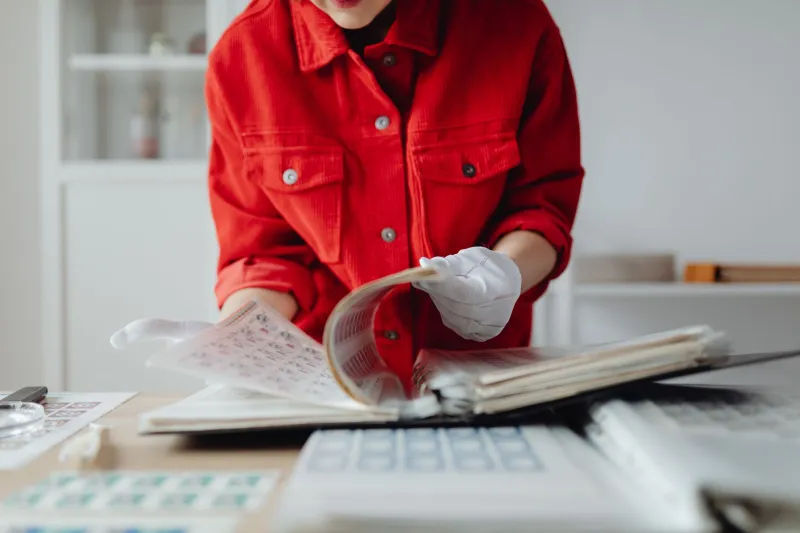
In communities that have embraced open documentation, the difference is tangible. Collectors are now routinely expected — and in some groups, required — to provide detailed photo sets before any trade or sale goes through. We're talking timestamped images from multiple angles, close-ups of markings and joints, photos of any known flaws, and in many cases, a visible record of where the piece came from.
Some collectors have gone even further, maintaining publicly accessible digital logs of their entire collections — essentially personal databases that show acquisition dates, purchase prices, condition notes, and any restoration work. It sounds like a lot of effort, and it is. But the collectors doing it say the payoff is real.
"When I list something now, I link to my collection record," explains a customizer and vintage doll trader from Portland who goes by the handle @PorcelainProof on several collector platforms. "People can see the full history of that piece. They can see I've had it for three years, what I paid, what condition it was in when I got it. That kind of transparency does more for my reputation than any number of five-star reviews."
Community Verification: When the Group Becomes the Expert
Beyond individual documentation, some communities have built formal verification systems where multiple experienced members weigh in before a piece gets a community-endorsed stamp of legitimacy. Think of it like peer review for dolls.
Moderators in these groups describe a process that's part detective work, part education. "We're looking at everything," says one moderator who oversees a large Facebook group focused on mid-century American fashion dolls. "The photo quality, the consistency of the story, whether the seller's account history matches what they're claiming. We've gotten pretty good at spotting when something doesn't add up."
These verification threads serve a second purpose beyond catching fakes — they create a searchable, public record that future buyers can reference. Someone asking about a specific doll line or manufacturer's mark can often find answers just by digging through old verification discussions. The community's collective knowledge compounds over time.
The Bad Actors Are Noticing
Here's the uncomfortable truth that most people in these spaces will tell you off the record: the bad actors haven't disappeared. They've just moved. Sellers who can't or won't provide documentation have largely migrated to platforms and communities with lower standards — places where a blurry photo and a confident description can still get a questionable piece out the door.
"We've seen it play out in real time," says a collector who moderates across multiple platforms. "Someone gets flagged in one group for providing inconsistent provenance, and within a week they've popped up somewhere else starting fresh. The documentation culture doesn't eliminate fraud — it concentrates it where protections are weakest."
That's a sobering reality check. But most collectors involved in transparency-forward communities argue that raising the floor in their own spaces is still worth doing, even if it doesn't solve the broader problem. And there's growing momentum toward cross-community communication — informal networks where moderators share information about known bad actors, creating something closer to an industry-wide reputation system.
What New Collectors Can Learn From All of This
If you're newer to collecting and feeling a little overwhelmed by all of this, here's the practical takeaway: the community you trade in matters as much as the deal itself. Before you commit to a purchase or trade, look at where it's happening. Does the seller have a documented history? Does the community have visible standards? Are there other experienced members who can weigh in?
And start building your own records now, even if your collection is small. Document what you buy, where you got it, and what condition it was in. Take good photos and keep them. Not just for insurance purposes — though that's a solid reason on its own — but because that paper trail is what separates a trusted collector from an anonymous username when it matters most.
Trust Is the New Currency
The doll market has always run on relationships. What's changing is that those relationships are increasingly being built on evidence rather than just familiarity. Collectors who embrace that shift — who see documentation as a feature rather than a burden — are finding that it opens doors. Better trades, stronger community standing, and buyers who are willing to pay fair prices because they genuinely know what they're getting.
It's a different kind of collecting culture than what came before. More rigorous, maybe a little less romantic. But for a hobby that routinely involves hundreds or thousands of dollars changing hands between strangers, a little rigor looks a lot like respect — for the dolls, for the community, and for each other.