Oversharing Your Collection Might Be Costing You More Than You Think

The Flip Side of Knowing Everything
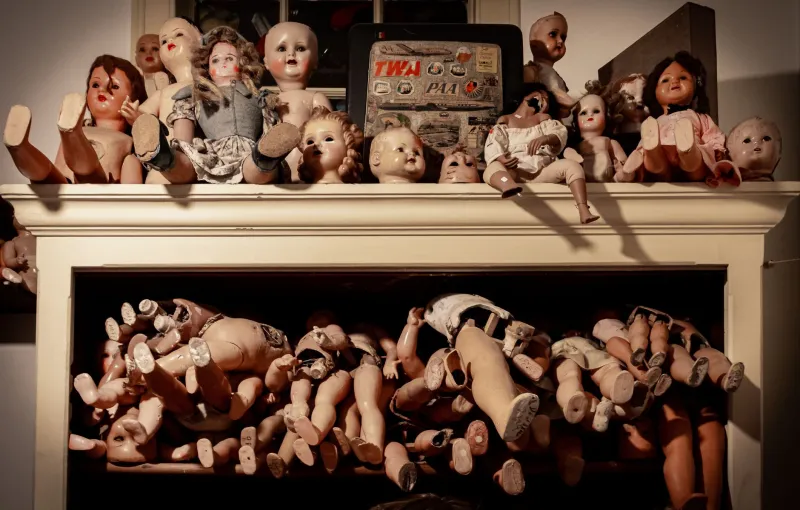
There's something genuinely exciting about a hobby where information is everywhere. You want to know what a 1987 porcelain limited edition is actually worth? Someone's posted it. You're curious whether that doll you found at a garage sale is legit? There's a thread, a spreadsheet, a pinned post, maybe a 12-minute YouTube breakdown. The doll collecting world has never been more documented, more cross-referenced, or more publicly visible.
But here's the thing nobody loves to say out loud: all that visibility has a price tag. Literally.
Over the past several years, as collectors have leaned harder into detailed online documentation — posting full collection inventories, sharing purchase prices, cataloging condition notes in public forums — something unexpected has happened to the market. Prices have climbed. FOMO has spiked. And buyer's remorse, that particular sting of wondering whether you paid too much or chased the wrong thing, has quietly become one of the hobby's most common side effects.
When Documentation Becomes a Price Signal
Here's the basic mechanic at work. When a collector posts a beautifully photographed inventory of their shelf — complete with acquisition costs and current estimated values — they're not just sharing for fun. They're broadcasting data. And that data gets absorbed by every seller, every reseller, and every casual browser who stumbles across it.
Long-time collectors who've been in the hobby for two decades or more will tell you the shift has been noticeable. What used to be soft, negotiable, community-priced knowledge has hardened into something closer to a public index. When everyone knows what everyone paid, the floor rises. Sellers anchor to the highest documented sale. Buyers feel pressure to move fast because they can see exactly how many other people are watching the same listing.
The data room culture — obsessive, meticulous, proudly public — has essentially created a real-time price discovery engine that didn't exist before. That's not inherently bad. But it does mean that the information advantage that once belonged to experienced collectors has largely evaporated. And when the advantage disappears, so does the deal.
FOMO Is a Feature, Not a Bug
Social media platforms have made FOMO a core part of the collecting experience, whether anyone intended that or not. When you see a collector in a Facebook group post a grail acquisition — the doll you've been hunting for three years, the one you almost bought last spring — the emotional response is immediate and real. You feel the loss of something you never actually had.
And that feeling has market consequences. Collectors report making purchases they weren't ready for, at prices they weren't comfortable with, because a post made the scarcity feel urgent. The doll wasn't necessarily rarer than it was six months ago. But the visibility of someone else's win made it feel that way.
This is the paradox of transparency in action. More information should theoretically lead to better decisions. But more information, delivered through social feeds designed to generate emotional engagement, often leads to faster decisions — which are not the same thing.
Buyer's Remorse in a Cataloged World
The documentation culture creates another wrinkle that doesn't get talked about much: it makes regret more precise.
In an earlier era of collecting, if you overpaid for something, you might not have known it for months or years. The information was scattered, slow-moving, and hard to triangulate. Now, you can find out you paid $40 over market rate within 48 hours of completing a purchase, just by scrolling the right group or checking a recently updated community price guide.
That specificity stings in a way that vague overpaying never did. Collectors describe a particular kind of remorse that's tied directly to the data — not just "I shouldn't have bought that" but "I can see exactly how much I shouldn't have bought that, and so can anyone else who looks."
For collectors who also publicly document their purchases, there's an added layer. The misstep is on record. It's part of their collection's public history. Some collectors have started keeping two versions of their documentation — one for public sharing, one for private reality — which somewhat defeats the purpose of the transparency culture that started this whole cycle.
Is Any of This Actually Bad?
It's worth pumping the brakes on the doom framing for a second, because the data room culture has also done genuinely good things for collectors.
Authentication has improved. Fakes get flagged faster because so many eyes are on so much documentation. New collectors can enter the hobby with real knowledge instead of having to learn entirely through expensive mistakes. Trades are fairer because both parties have access to the same baseline information. Community trust has grown in some segments precisely because people are willing to show their receipts.
The question isn't whether transparency is good or bad. It's whether collectors are making peace with the full cost of it — including the emotional costs that don't show up on any spreadsheet.
What Smart Collectors Are Doing Differently
Some enthusiasts have started drawing deliberate lines around what they share and when. Waiting to post a significant acquisition until after the market moment has passed. Keeping pricing details out of public posts while still sharing the joy of the find. Engaging with community price guides as reference points rather than gospel.
Others have leaned into the data even harder, arguing that the answer to information overload is better information literacy — learning to read the signals without being ruled by them.
Both approaches have merit. What doesn't seem to work, based on what collectors describe, is the middle ground of full transparency without any emotional framework for processing what that transparency costs. Posting everything, watching everything, tracking everything — and then being surprised when the market feels overwhelming and the hobby feels more stressful than fun.
The Real Takeaway
The doll collecting community built something remarkable when it embraced documentation and public sharing. The knowledge base is richer, the community is more connected, and the culture of celebrating collections openly has brought genuine joy to a lot of people.
But markets respond to data, and emotions respond to social feeds, and neither of those things is neutral. Knowing that doesn't mean you have to stop posting. It just means you get to collect with your eyes open — which, honestly, is the most collector thing you can do.