Seen Enough, Shared Too Much: How Smart Collectors Are Drawing the Line Online
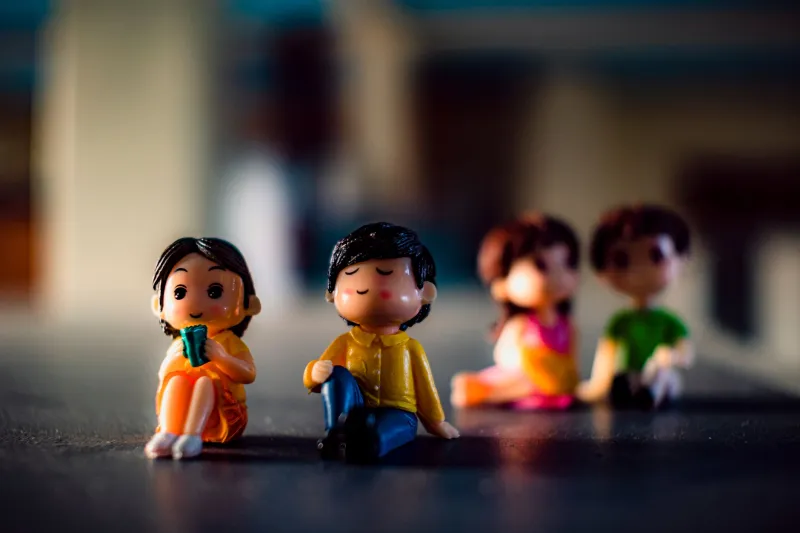
There's a particular kind of joy that comes from posting a shelf photo and watching the comments roll in. Fellow collectors recognize a rare variant, someone asks where you found it, and for a few hours your corner of the internet feels warm and genuinely connected. It's one of the best things about being part of the doll community.
But somewhere between that first enthusiastic Instagram grid and the moment a stranger DMs you asking for your home address to "arrange a local pickup," a lot of collectors start to wonder: how much is too much?
This is the privacy paradox that nobody really talks about out loud. You want community. You need community — to learn, to trade, to stay current on what's hot and what's cooling off. But the same visibility that builds relationships also builds a target.
What's Actually at Risk
Let's be direct about the threats, because they're not all the same and they don't all come from the same place.
Physical theft is the one people think of first. If your social media presence makes it obvious that you own a room full of valuable vintage Barbie pieces, rare Fashion Royalty sets, or a complete run of first-edition American Girl dolls, you've done the research for anyone willing to do something about it. Burglars have used Instagram to identify targets. It happens.
But there are subtler risks that actually affect more collectors day-to-day. Price manipulation is one. If you're known in a community as someone who desperately wants a specific piece — and you've posted about it publicly multiple times — sellers in that same community will price accordingly. Your enthusiasm becomes a negotiating disadvantage.
Then there's the social friction. Sharing your most valuable acquisitions can shift how people engage with you. Suddenly you're not a fellow collector; you're a mark, a resource, or a rival. The community dynamic changes.
The Selective Sharing Framework
The collectors who navigate this best tend to operate with what you might call a tiered sharing approach. They're not secretive, exactly — they're selective.
The basic idea: share your enthusiasm freely, but share your specifics carefully.
You can absolutely post about your love of a particular doll line without cataloguing every piece you own. You can participate in valuation discussions without disclosing that you personally own three of the dolls being discussed. You can trade and connect without giving anyone a full inventory of your room.
Practically, this might look like:
- Posting cropped or partial shelf photos that show interesting pieces without revealing scale or layout
- Engaging in discussions about dolls you've owned in the past rather than ones currently in your possession
- Separating your collector identity from your personal identity — a hobby-specific username and email, no location data in your profile, no cross-linking to your real-name accounts
- Keeping your most valuable pieces entirely offline, full stop
None of this means being fake or evasive in conversations. It just means the internet doesn't need a complete picture.
Vetting Online Friendships Without Being Paranoid
Here's the thing about doll collector communities: most people in them are genuinely wonderful. Enthusiastic, knowledgeable, generous with their time and expertise. The hobby attracts a certain kind of person, and that person is usually pretty great.
But "most people" isn't "all people," and online spaces make it easy to present a curated version of yourself that doesn't match reality.
Experienced collectors tend to develop a slow-trust model for online friendships. Before sharing anything sensitive — the value of your collection, your physical location, your interest in a specific trade — they spend time observing. Does this person have a consistent posting history? Do other established community members vouch for them? Have they demonstrated knowledge that tracks with their claimed experience level?
Forum and Facebook group longevity matters. Someone with five years of post history in a doll community is a very different risk profile from someone who created an account last month and immediately started asking what you have for sale.
Private groups and invite-only Discord servers have become popular partly for this reason. They're not perfect — bad actors can infiltrate closed communities too — but the friction of getting in creates a natural filter.
Building a Semi-Private Collector Identity
Some collectors have found a middle path that works really well: a public-facing presence that's genuine but carefully scoped.
This might mean maintaining an account that focuses on doll history, customization techniques, or community news without ever really showing your personal collection. You contribute value to the community — knowledge, enthusiasm, context — without making yourself a target.
Others keep two separate presences: one public account for general engagement, one private or semi-private space where they share more freely with a smaller, vetted group. It takes a little more management, but it lets you have both things — real community and real privacy.
The key insight here is that your value to the community doesn't have to come from what you own. It can come from what you know, what you share, how you engage. The most respected voices in most collector communities aren't necessarily the people with the biggest collections. They're the people who show up consistently and contribute something real.
When to Pull Back Entirely
There are moments when the calculus shifts and even selective sharing feels like too much.
If you've recently made a major acquisition — something genuinely rare and valuable — the weeks right after are probably not the time to post about it. Let the excitement settle before you decide what (if anything) to share.
If you're in the middle of an active trade negotiation, keep it private until it's done. Announcing what you're looking for publicly can drive up prices before you've closed the deal.
And if you've had any kind of uncomfortable experience — a pushy DM, a stranger showing up at a local swap meet knowing more about your collection than you'd expect — trust that instinct. It's okay to go quieter for a while.
Community on Your Own Terms
The doll collecting world is genuinely one of the more welcoming corners of the internet, and that's worth protecting — both for yourself and for the community as a whole.
The goal isn't to become invisible. It's to stay in control of your own story. You get to decide what you share, with whom, and when. The community is better when people feel safe enough to show up authentically, and that safety starts with knowing you don't have to put everything on the table just to belong.
Share what brings you joy. Protect what matters. And remember that the best collector friendships are built over time, not announced in a single shelf post.