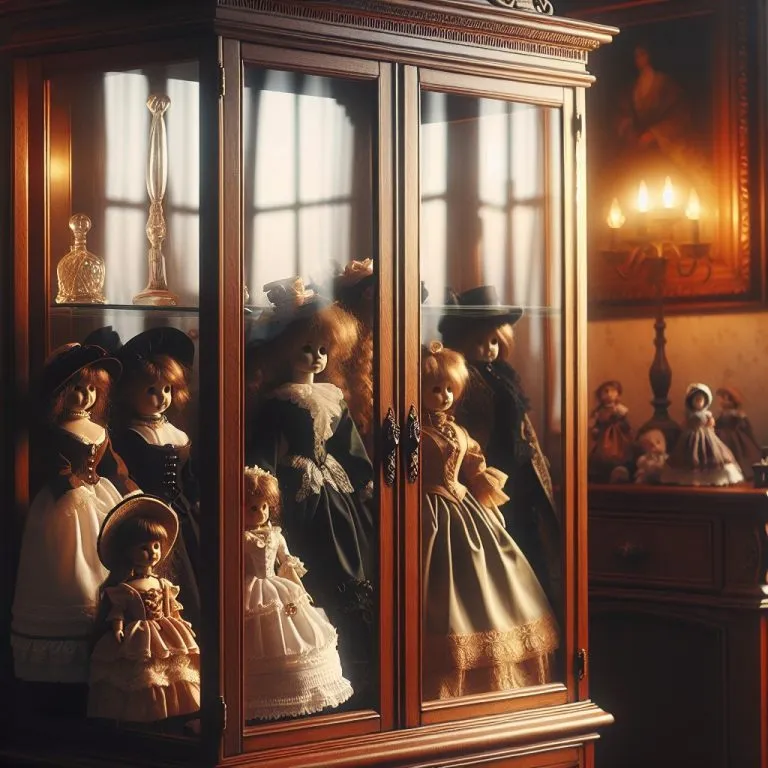
That Regret Buy Sitting on My Shelf Turned Out to Be My Best Teacher

The Box That Arrived and Immediately Felt Wrong
It was a Tuesday in late October, and the doll I'd impulse-bought on a whim three weeks earlier finally showed up at my door. I remembered the listing vaguely — a $200 fashion doll from a line I'd never collected, by a brand I mostly ignored, in a colorway I wasn't even sure I liked. I'd been browsing late at night, half-distracted, and something about the photos made me click Buy before my brain caught up with my fingers.
When I pulled her out of the shipping peanuts, my gut confirmed what I'd suspected: this wasn't my thing. She didn't fit my shelf aesthetic. She wasn't part of any series I tracked. She had no obvious resale upside. By every metric I used to evaluate a purchase, this one was a dud.
She sat in the corner of my display for two months before I actually started paying attention to her. And when I did, she quietly dismantled about half of my assumptions about what I was doing as a collector.
What 'Outside Your Lane' Actually Teaches You
Most of us build collecting criteria over time — price ceilings, era preferences, specific lines, condition standards. Those rules feel useful. They help you move fast in competitive markets, filter out noise, and stay focused. But they also create blind spots so wide you could drive a truck through them.
The doll I bought by accident was from a line I'd mentally written off years earlier based on secondhand opinions in forums. I'd absorbed the community consensus without ever actually handling one. When I finally sat with her — really looked at the construction, the face paint detail, the articulation — I realized my opinion had been entirely borrowed. I didn't actually know what I thought. I'd just repeated what I'd heard.
That's a humbling thing to admit. But it's also incredibly common. Online collecting communities are powerful, and they shape taste in ways that aren't always visible. You start to absorb a kind of collective wisdom that can quietly replace your own direct experience. The $200 doll I didn't want forced me to form an actual opinion instead of recycling someone else's.
The Market Assumption That Crumbled First
Here's the part that genuinely surprised me: after I started researching the line out of mild curiosity, I discovered the resale market was considerably more active than the general collector discourse suggested. There were dedicated collectors, active trading communities, and a price floor that was holding steady. The community I'd been hanging around had simply never talked about it — not because the line was worthless, but because it fell outside their focus.
This is one of the quieter risks of staying inside a single collector ecosystem for too long. You start to mistake the community's attention for the market's reality. A doll line that doesn't get discussed in your usual spaces isn't necessarily a poor investment or a dead end. It might just be living in a different corner of the hobby that you haven't found yet.
That realization sent me down a rabbit hole that eventually led to a couple of genuinely good finds — pieces from the same line that were undervalued in the spaces where I shopped, partly because demand existed in communities I hadn't been watching.
What 'Wrong' Purchases Reveal About Personal Taste
Beyond the market stuff, the accidental buy also forced a more personal reckoning. I'd been collecting long enough to have a well-rehearsed answer to the question of what I liked. Specific eras, specific aesthetics, specific construction types. It was a clean story.
But sitting with a doll that didn't fit the story, I started noticing things I genuinely responded to — things I didn't have language for yet because I'd never encountered them in my usual collecting lane. The way the face sculpt handled light differently than what I was used to. A particular quality to the fabric choices. Small stuff, but real.
This is something experienced collectors talk about in private more than they do in public: the collection you think you're building and the collection you're actually building aren't always the same thing. Your purchases over time tell a story about your taste that's often more honest than the one you'd narrate yourself. A detour buy, precisely because it bypasses your filters, sometimes gets closer to what you actually respond to than a carefully considered acquisition does.
The Case for Intentional Mistakes
I'm not suggesting everyone should throw money at random listings and hope for revelation. That's not a strategy — that's chaos with a PayPal account. But there's a middle version of this worth considering: the deliberate, low-stakes outside-lane purchase. A single piece from a line you've dismissed. Something in a price range that stings a little but won't wreck you. An era you've never seriously explored.
The collector community tends to reward focus and punish distraction. Specialization is genuinely valuable — it builds expertise, tightens your market read, and makes you a more credible trading partner. But specialization can also calcify. When your criteria become rigid enough, you stop discovering things. You stop being surprised. And the hobby gets smaller.
The doll that's still sitting in the corner of my shelf — I never did sell her — has become a kind of reminder that my framework isn't the whole map. There's territory outside it. Some of that territory is genuinely not for me, and that's fine. But some of it is, and I almost never would have known.
What I Actually Do Differently Now
A few concrete things changed after that purchase. I started reading discussions in collector communities I'd previously ignored, not to shift my focus but just to stay curious. I loosened one of my price rules to allow for occasional exploratory buys. And I started asking myself, more regularly, whether an opinion I held about a doll line was actually mine or whether I'd just absorbed it from somewhere.
None of this made me a less focused collector. If anything, I think it made my core collection sharper, because I had a clearer sense of what I was choosing and why — not just what I'd been told to value.
Two hundred dollars is a real amount of money. I'm not pretending otherwise. But as collecting education goes, it was one of the better investments I've made. Some lessons you can read about in a forum thread. Others you have to buy your way into.