One Doll to Rule Them All — And Why That Thinking Will Cost You
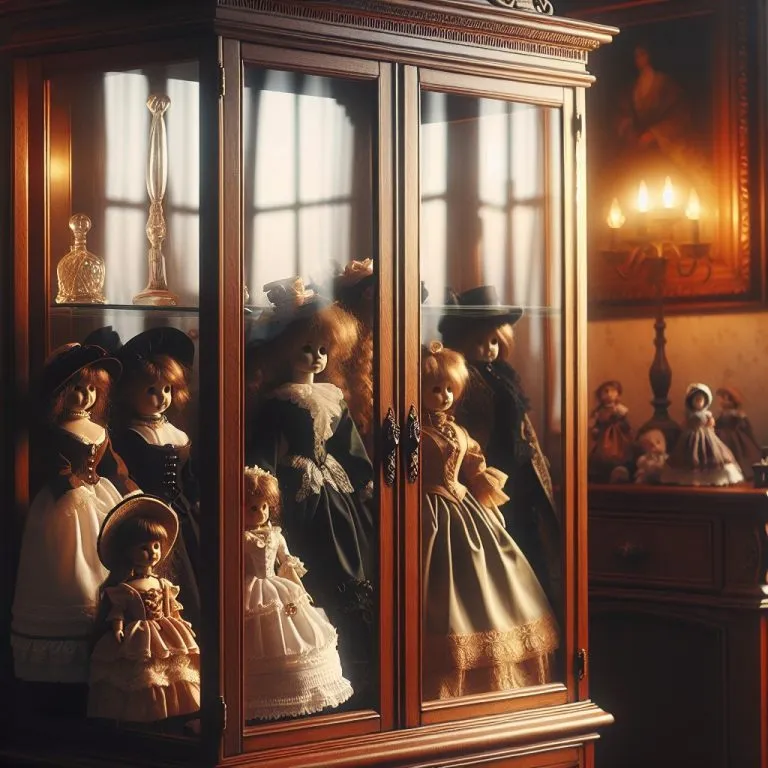
Photo: vintage collectible doll displayed alone on pedestal under spotlight, via thismakesthat.com
Ask any collector to name their grail doll and watch what happens to their face. Something shifts. The casual enthusiasm of a hobbyist talking about their collection gives way to something more intense — part reverence, part longing, part obsession. It's one of the most recognizable expressions in the hobby.
And it might be quietly destroying their collection strategy.
The concept of the "grail" — the one piece that would make a collection feel complete, the acquisition that looms above all others — is as old as collecting itself. But in an era of real-time market data, social media hype cycles, and increasingly sophisticated secondary markets, grail-chasing has taken on new dimensions. And new dangers.
What the Grail Actually Does to Your Brain
Behavioral economists have a term for what happens when we fixate on a specific outcome: tunnel vision. The technical version involves something called "attentional narrowing" — our focus collapses onto the target, and we systematically underweight everything else. In investing, this is how people hold a losing stock too long. In doll collecting, it's how someone pays $800 for a doll worth $500 because they've been looking at it for two years and can't see the price clearly anymore.
The psychological mechanism is straightforward even if the experience doesn't feel that way. The longer you pursue something, the more you've already "invested" in the chase — emotionally, financially, in terms of time and research. Economists call this the sunk cost fallacy. Collectors call it "I've come too far to walk away now."
But here's what that logic actually costs you.
The Opportunity Cost Nobody Talks About
While a collector is spending months — sometimes years — hunting a single grail piece, the market keeps moving. Pieces that were undervalued when the grail hunt started have appreciated. Categories that were overlooked are now hot. Trades that would have been excellent six months ago have closed for someone else.
Take the experience of a collector we'll call David, based in the Pacific Northwest, who spent the better part of three years chasing a specific prototype Barbie variant he'd seen sell at auction in 2019. He passed on multiple strong pieces in adjacent categories because, in his words, "everything felt like a consolation prize." When he finally acquired his grail — paying roughly 40% over what he estimated its fair value to be — he looked up to find that several dolls he'd passed on had doubled in value.
"I got the doll I wanted," he says. "But my collection is weaker for it. That's a weird thing to sit with."
This pattern shows up across the hobby with striking regularity. The grail acquisition itself isn't the problem — it's the opportunity blindness that develops around it.
When the Grail Becomes a Trading Liability
Grail-chasing also creates predictable problems in the trading ecosystem. Collectors who are visibly, publicly obsessed with a specific piece are broadcasting information that skilled traders can — and do — use against them.
This isn't cynical speculation. It's basic negotiation dynamics. If someone knows you've wanted a particular doll for three years and they have one, your leverage in that transaction is significantly compromised. You've already signaled that you'll pay a premium. The only question is how large a premium.
Experienced traders in the community are often deliberately vague about their want lists for exactly this reason. They know that information asymmetry matters. The collector who walks into a negotiation showing all their cards is the collector who leaves overpaying.
There's also the post-acquisition problem. Grail pieces acquired at inflated prices are hard to trade out of if circumstances change. You paid $900 for something with a $600 market value because it was your grail. It isn't anyone else's. If you need liquidity — if your collecting priorities shift, if life intervenes — you're holding an asset you overpaid for in a market that doesn't share your valuation.
The Completion Fallacy
Underlying most grail obsession is an assumption worth examining: that acquiring the piece will feel like completion. That the collection will reach a kind of wholeness it currently lacks.
Collectors who've been in the hobby long enough tend to be quietly skeptical of this idea. Not because grail acquisitions aren't satisfying — they often are, at least temporarily — but because the feeling of incompleteness rarely disappears with any single purchase. It relocates.
The grail gets acquired. A new grail emerges. The horizon moves.
This isn't a criticism of ambition or passion. It's just an honest description of how collecting psychology tends to work. Understanding it doesn't diminish the joy of the hunt. But it does argue against letting any single piece become so central to your strategy that it distorts everything else.
Building a Strategy That Grail-Proofs Your Collection
None of this means you shouldn't have a want list, or that pursuing specific pieces is somehow wrong. The hobby wouldn't be what it is without the thrill of the hunt. The goal is maintaining enough strategic clarity that the hunt doesn't hunt you.
A few approaches collectors report finding genuinely useful:
Set a ceiling before you start. Decide what you're willing to pay for a piece before you're emotionally activated by the opportunity to acquire it. Write it down. Honor it.
Keep your want list broad. Collectors who maintain a list of ten to fifteen pieces they'd genuinely like to own tend to make better decisions than those focused on one. The breadth creates options and reduces the psychological pressure on any single acquisition.
Track what you're passing on. If you're consistently declining other pieces because of a grail pursuit, keep a record. Revisit it periodically. The opportunity cost becomes visible when you write it down.
Separate the emotional value from the financial one. It's okay for a piece to matter to you personally in ways that exceed its market value. Just be honest with yourself about which is which when you're deciding what to pay.
The best collections aren't built around a single obsession. They're built through consistent, clear-eyed decision-making over time — with the occasional grail thrown in, acquired on reasonable terms, celebrated properly, and then integrated into a strategy that keeps moving forward.