Love, Limits, and Lacquer: When Your Collection Meets Your Relationship

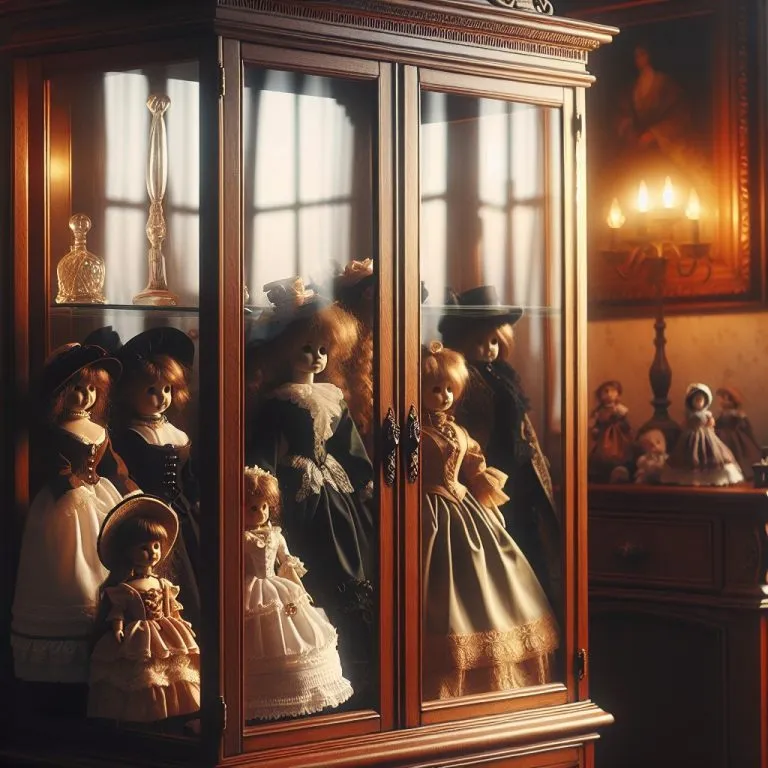
Photo by Photo by J Huang on Unsplash on Unsplash
There's a moment most serious doll collectors know well. You come home with a new acquisition — maybe it's a vintage Madame Alexander you've been hunting for months, maybe it's a limited Integrity Toys release that sold out in four minutes — and before you've even pulled it out of the shipping box, you feel it. The look. The pause. The carefully neutral "oh, another one?"
For collectors who share their lives with non-collectors, that moment is practically a rite of passage. And while plenty of articles talk about shelf space and storage solutions, the real conversation — the one happening at dinner tables and in quiet arguments after the kids go to bed — is about something more complicated than cubic footage.
It's about identity, respect, and what happens when one person's passion feels like the other person's problem.
The Numbers Behind the Tension
Doll collecting in the US isn't a casual hobby for everyone who does it. Dedicated collectors routinely spend hundreds to thousands of dollars annually, and that's before factoring in display cases, archival materials, or the occasional estate sale road trip. For a partner who doesn't share the enthusiasm, watching money and square footage disappear into a collection can feel genuinely destabilizing.
Sarah M., a collector based in Columbus, Ohio, has been building her Barbie fashion doll collection for eleven years. Her husband, Derek, is supportive — now. "The first two years were rough," she admits. "He didn't understand why I needed more when I already had so many. It felt to him like I was filling a hole he couldn't fill. That wasn't it at all, but I get why it looked that way."
What shifted things for them was a frank conversation about money — specifically, agreeing on a monthly budget for the hobby that Derek had input on. "Once he felt like he had a voice in it, he stopped feeling excluded by it," Sarah says. "Now he actually helps me research prices. He's kind of proud of how good I've gotten at spotting undervalued pieces."
When 'Supportive' Has a Shelf Life
Not every story ends with a partner becoming a research assistant. Marcus T., a customizer and collector in Atlanta, describes a relationship that ended partly over his collection. "She said she was fine with it at first. But over time, the studio space crept into the living room, then the bedroom closet. I wasn't listening to how much it was bothering her until she told me she felt like she lived in a storage unit."
Marcus doesn't blame the hobby for the breakup — "we had other issues" — but he acknowledges that the collection was a pressure point that never got properly addressed. "I wish we'd set clearer expectations earlier. Not rules, just... an honest conversation about what was reasonable."
This is a pattern that comes up repeatedly in the collector community. Early accommodation — partners saying "I don't mind" when they actually do — tends to calcify into resentment if it goes unchecked. The collection doesn't grow overnight, but tolerance for it can quietly erode.
The Language of Compromise
Couple's therapists who work with hobbyists often point to the same underlying dynamic: the collecting partner feels judged for something central to their identity, while the non-collecting partner feels unseen in their own home. Neither of those experiences is wrong. Both need to be named.
Jamie L., a collector and customizer in Portland, Oregon, found that reframing helped. "I stopped defending the hobby and started including her in it. I'd show her a doll I was working on, explain what I was trying to do creatively. She started seeing it as something I made, not just something I bought. That changed everything."
For collectors who customize — a growing segment of the community — this kind of engagement can be especially effective. The craft element makes the hobby tangible in a way that pure collecting sometimes isn't. A partner who watches you spend forty hours hand-rooting hair on a repaint is watching you work, not just accumulate.
Dealbreakers Are Real
It's worth being honest about something the community sometimes dances around: for some people, a serious collecting habit is genuinely incompatible with what they want in a shared life. That's not a character flaw on either side.
A collector who needs dedicated studio space, who travels for doll shows, who spends meaningfully on acquisitions — that person is living a particular kind of life. A partner who wants a minimalist home, shared financial goals that don't include hobby spending, or simply a living room that looks like a living room isn't being unreasonable.
The collectors who seem to navigate this best are the ones who are honest about who they are before things get serious. "I tell people I'm dating pretty early that this is a big part of my life," says Rachel K., a vintage Barbie specialist in Chicago. "Not as a warning. Just as information. If someone's going to be in my life, they should know what my life looks like."
What the Community Has Learned
Talking to collectors across the country, a few practical patterns emerge from the relationships that seem to work:
Designated space matters. Collectors who have a dedicated room — even a small one — report significantly less friction than those whose collections spread through shared areas. The physical boundary signals respect for shared space.
Transparency about spending helps. Hiding purchases, even small ones, tends to erode trust faster than the spending itself. Many collectors operate on a hobby budget their partner knows about and agrees to.
Interest doesn't have to be shared to be respected. The most successful arrangements aren't usually ones where the partner becomes a collector too. They're ones where the partner understands why it matters, even if it doesn't matter to them personally.
Resentment is the real dealbreaker. It's rarely the collection itself that breaks things. It's the accumulated weight of feeling unheard — on both sides.
At the end of the day, doll collecting is a deeply personal pursuit. The community here at Doll Data Room knows better than most that the hobby touches something real — creativity, history, nostalgia, identity. The challenge is making sure the people we share our lives with know that too. Not so they'll love it the way we do, but so they'll understand why we do.