One Size Fits Nobody: The Sizing Chaos Wrecking Doll Fashion Shopping
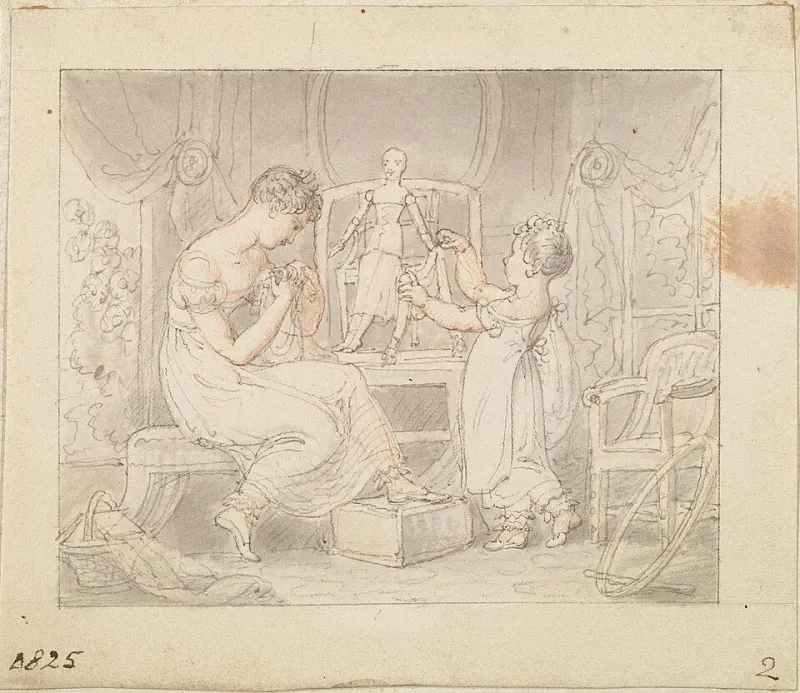
Photo: Edward Francis Burney, CC0, via Wikimedia Commons
Somewhere in America right now, a kid is fighting to pull a tiny denim jacket over a doll whose arms simply will not go through the sleeves. Somewhere else, an adult collector is staring at a beautifully sewn dress that hangs off her doll like a sack. Same listing, same promise: fits most 18-inch dolls.
"Most" is doing a heroic amount of work in that sentence.
The Problem With "18-Inch"
Here's the thing most casual buyers don't realize: "18-inch dolls" are not one category. They're a family of body types that happen to share a height. Two dolls can both measure 18 inches from head to toe and be completely incompatible when it comes to clothes — because height is the least important number in doll fashion.
What actually determines fit:
- Chest/bust circumference — the biggest variable. One popular 18-inch body measures around 11 inches at the chest; another measures closer to 13.
- Waist and hip — especially for pants and fitted dresses.
- Shoulder width and arm hole placement — where tops fail first.
- Torso length — a long-bodied doll and a short-bodied doll of the same height need entirely different dress hemlines.
- Neck circumference — the reason some doll sweaters simply won't pull on.
Add in the fact that manufacturers tweak body sculpts over the years without renaming them, and you've got a market where a pattern that fit a doll bought in 2015 doesn't fit the same character bought in 2023.
Why Sellers Keep Vaguing Out
Talk to small-batch doll clothing makers and the story is remarkably consistent: they're not being lazy, they're being squeezed.
A one-person operation selling on Etsy or at craft fairs can't possibly buy every doll on the market to test against. Many work from a single "fit doll" — whatever they own — and generalize from there. Listing every measurement for every garment takes time, and vague sizing labels like "fits most" cut down on the back-and-forth questions. The result, of course, is that the ambiguity just gets pushed downstream to the buyer, who eats the return shipping or, more often, quietly keeps an outfit that doesn't fit.
Bigger manufacturers have their own version of the problem: licensing. An outfit designed for one brand's doll gets produced and then marketed with loose compatibility claims, because "fits most" sells more units than "fits exactly two body types, check the chart."
The Tape Measure Crowd
Which is why a certain kind of collector never buys doll clothes without a flexible measuring tape within reach. Ask around in any sewing-focused doll group and you'll find members who have charted the measurements of a dozen body types, cross-referenced against specific sellers, and posted the results for free.
These are the hobby's unsung heroes of e-commerce. Their spreadsheets — often shared in Facebook groups, Reddit threads, and yes, community databases like this one — turn "fits most 18-inch dolls" into actual numbers you can compare against your shelf. If you've ever avoided a bad purchase because someone documented a seller's fit data, you've benefited from this quiet infrastructure.
Buying Smart: A Field Guide
A few habits will save you most of the heartache:
- Measure your doll once, keep the numbers. Chest, waist, hip, torso length, neck. Write them on a card and stick it in your sewing kit. It takes five minutes and lasts forever.
- Read the listing for measurements, not sizes. A seller who lists a flat-lay measurement of the actual garment is telling you they've done the work. A seller who only says "fits American 18-inch style dolls" is asking you to gamble.
- Check photos for the fit doll. If the listing shows the outfit on a specific doll, and you know that doll's body type, you can extrapolate.
- Read recent reviews. Fit complaints cluster. Three reviews in the last month saying "too tight in the shoulders" is data.
- Buy the size up for elastic-waist pieces. Stretchy bottoms are forgiving; shoulders and necklines are not.
When the Outfit Almost Fits: Altering 101
The good news is that doll clothes are the most forgiving sewing project on earth. Seams are tiny, fabric is cheap, and mistakes cost you inches of thread.
- Too big? Take in side seams with a small running stitch or, honestly, fabric glue for no-sew fixes. A tuck at the back waist rescues most sack-like dresses.
- Too small? Add a back closure. Replacing a pull-over top's back seam with hook-and-loop tape (the hobby's beloved Velcro) turns a strangle-fitting shirt into an adjustable one.
- Too long? Hem it. A rolled hem with a dab of fabric glue looks clean on everything except formalwear.
- Shoulders won't fit? Open the shoulder seams partway and add snap tape. Five minutes, and the top now fits two different body types.
The seamstresses in the community will tell you the same thing: once you alter one outfit successfully, you stop seeing ill-fitting doll clothes as a problem and start seeing them as raw material at a discount.
A Modest Proposal for Sellers
If you make or sell doll clothes, here's the easiest trust-builder in the hobby: publish the flat measurements of every garment and the measurements of your fit doll. That's it. It costs you ten minutes per listing and it converts the entire "will it fit" anxiety into a math problem the buyer can solve. In a market drowning in vagueness, numbers are a competitive advantage.
Until then, keep the tape handy. In this hobby, the measuring tape isn't an accessory — it's the difference between a cute new outfit and a very small, very expensive dusting cloth.