To Fix or Not to Fix: The Restoration Question That Divides Serious Vintage Doll Collectors
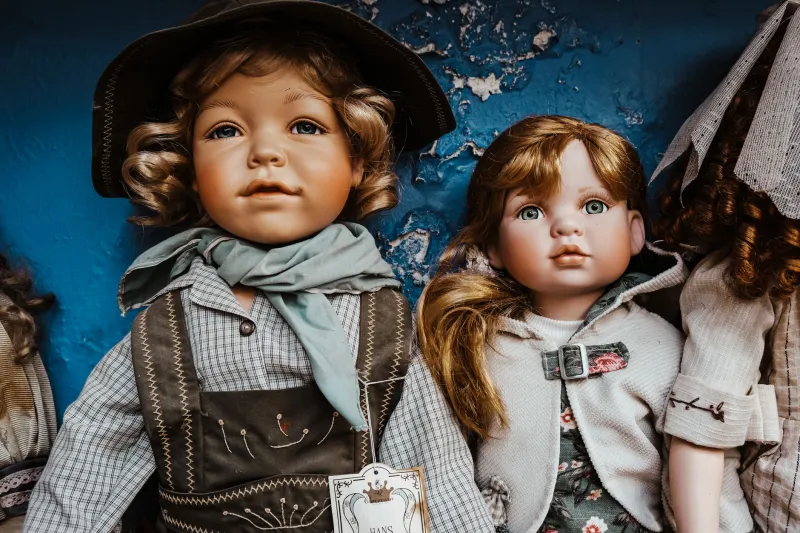
Picture this: you've just pulled a 1950s hard plastic Madame Alexander from a dusty estate sale box. The dress is brittle, one arm is loose, and there's a hairline crack running along the cheek. Your heart is hammering. You paid $40 for it, and you know — you know — this doll could be worth considerably more. But in what condition? As-is, with all her honest wear? Or cleaned up, re-strung, and looking closer to factory fresh?
This is the restoration dilemma, and it doesn't have a clean answer. Ask ten serious collectors and you'll get ten different philosophies. What's clear is that the decision you make in that moment can mean the difference between a doll that appreciates and one that quietly loses its standing in the market.
What "Restored" Actually Means — and Why It Matters
Restoration isn't a single thing. It's a spectrum that runs from gentle surface cleaning all the way to full repaints, replacement limbs, new wigs, and restrung elastic. Each intervention sits at a different point on the value scale, and collectors who lump them all together are setting themselves up for expensive mistakes.
Professional doll restorer Diane Calloway, who operates out of her home studio in central Ohio and has been working on vintage pieces for over two decades, draws a sharp line between conservation and restoration. "Conservation is about stabilizing what's there," she explains. "You're cleaning, protecting, maybe doing minimal structural repair. Restoration is about making something look different than it currently does. Those are two very different conversations when it comes to value."
For most serious buyers in the vintage market, originality is the gold standard. A doll with original paint, original hair, original clothing — even if worn — will almost always command more respect from advanced collectors than one that's been extensively worked on. The wear itself is proof of age, proof of authenticity.
The Numbers Don't Lie (But They're Complicated)
Let's talk market reality. On platforms like eBay and through specialized auction houses, a well-documented, untouched vintage doll in good original condition consistently outperforms a restored equivalent at the high end of the market. A mint-in-box 1960s Barbie with original accessories? Collectors will pay a premium to know nothing has been altered. The moment a repaint enters the picture — even a skilled one — a significant portion of that premium evaporates for purist buyers.
That said, the picture shifts considerably in the mid-range market. A doll that's genuinely damaged — crazing, cracks, missing features — may actually sell better after thoughtful restoration than it would in rough original condition. There's a buyer for every category, but you need to understand which buyer you're selling to.
Chicago-based collector Marcus Trent has been buying and selling vintage dolls for fifteen years and has a blunt take on the economics. "If I'm buying a doll to flip, I need to know exactly what the ceiling is for that piece. A restored mid-grade doll might move faster and at a better price than a damaged original. But if we're talking about a genuinely rare piece — a first edition, a prototype, something with documented provenance — I'm not touching it. I'm not even cleaning it beyond the basics."
Voices on Both Sides of the Debate
Not everyone agrees that original condition is always king. There's a growing contingent of collectors, particularly those who came to the hobby through customization culture, who view restoration as a form of respect — a way of honoring the doll by returning it to something closer to the maker's original vision.
Sarah Lim, a doll artist and collector based in Portland, Oregon, pushes back on what she calls "the fetishization of decay." "There's this idea in some collector circles that a doll should sit in whatever state it's found in, like it's a museum artifact. But these were made to be loved and played with. If I can take a doll that looks like it's been through a disaster and give it dignity again, I think that's a good thing — regardless of what it does to the resale price."
Diane Calloway respects that view but maintains that transparency is everything. "If you restore a doll and sell it without disclosing that restoration, that's where things get ethically messy. The market depends on honest information. A buyer has the right to know what they're getting."
This point — disclosure — is perhaps the one principle that both sides of the debate agree on completely.
A Framework for Making the Call
So how do you actually decide? Here's a practical decision framework that draws on the collective wisdom of experienced collectors and restorers:
Step 1: Identify the doll's rarity and collector demand. Is this a commonly found piece or something genuinely scarce? The rarer the doll, the more you should lean toward minimal intervention.
Step 2: Assess the nature of the damage. Surface grime and loose stringing are very different from a cracked face or missing fingers. Structural issues that affect display and stability may justify repair; cosmetic wear often does not.
Step 3: Know your end goal. Are you keeping this doll, selling it to a general buyer, or targeting advanced collectors? Your answer changes the calculus entirely.
Step 4: Get a second opinion before doing anything irreversible. Repainting cannot be undone. Neither can re-rooting hair or replacing original parts. Post photos in collector communities — including right here at Doll Data Room — and get input before you commit.
Step 5: Document everything. Whether you restore or preserve as-is, photograph the doll thoroughly before any work begins. That documentation becomes part of the doll's history and adds transparency for any future sale.
The Bottom Line
There's no universal right answer to the restoration question, which is exactly what makes it so endlessly interesting to collectors. What the data consistently shows, though, is that the market rewards honesty and penalizes surprises. A clearly disclosed, well-executed restoration on a mid-grade piece can be a smart move. Undisclosed work on a rare doll is a reputation-killer and potentially a legal headache.
The vintage doll market is built on trust between buyers and sellers, and that trust starts with knowing — and saying — exactly what you have. Whether you choose to restore or preserve, make that choice deliberately, document it carefully, and own it completely.
Your doll's story doesn't end with the damage. It just gets more complicated. And in this hobby, complicated is usually where things get interesting.