Focus or Frenzy? What New Collectors Actually Learn in Year One

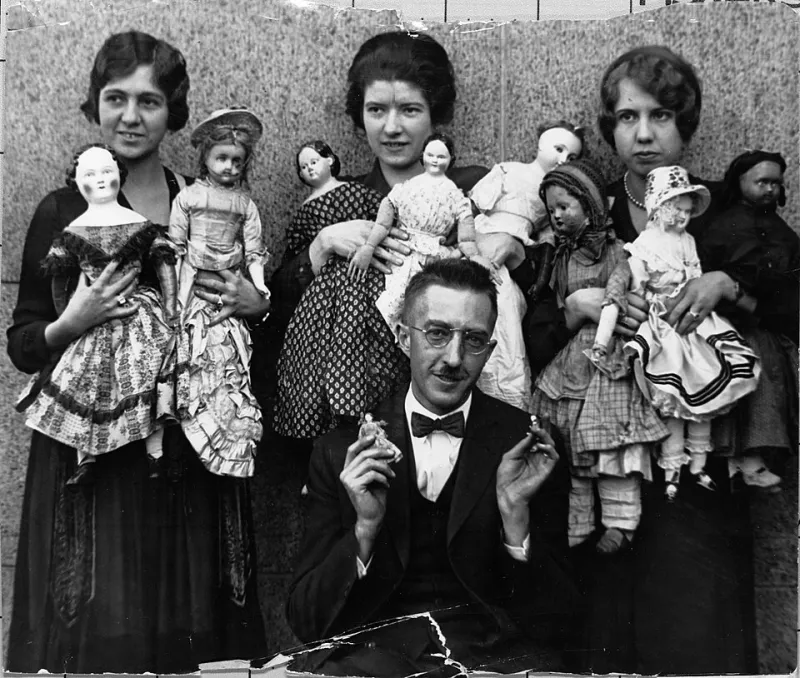
Photo by Photo by Judy Beth Morris on Unsplash on Unsplash
The first year of collecting is a lot. There are dolls everywhere you look — thrift stores, estate sales, eBay rabbit holes at midnight, Facebook groups that seem to post new finds every twenty minutes. Everything looks interesting. Prices seem negotiable. The community is welcoming. It feels like the right time to just... buy broadly and sort it out later.
Most experienced collectors will tell you, with the specific weariness of someone who has been there, that this instinct is the single most expensive thing about starting out.
The Everything Phase
Almost every veteran collector has an origin story that involves a chaotic first phase. Call it the everything phase — the period before a collector has developed enough knowledge, taste, or discipline to pass on something just because it doesn't fit a direction they've chosen.
"I spent my first eight months buying whatever caught my eye," says Renata V., a collector based in Portland who now focuses exclusively on 1960s and 70s Japanese fashion dolls. "I had Bratz, I had a couple of Gene dolls, I had some Barbies, random porcelain pieces. None of it was related. I didn't know what I was doing and I spent probably $900 that year on stuff I eventually sold for maybe $300."
That math — spending broadly, selling at a loss when focus eventually develops — is the standard trajectory. It's not a disaster, but it's tuition. And for collectors who'd rather skip that particular class, there's a faster path.
Why Focus Builds Value (in More Ways Than One)
Specialization does something that broad buying can't: it builds expertise. When you collect within a defined area — a specific doll line, a manufacturer, an era, a scale — you start to develop pattern recognition that casual broad collectors never get. You learn what variants exist, what's genuinely rare versus what just looks rare, what condition issues are specific to that type, and what prices actually reflect the market versus what a seller is hoping for.
That expertise has direct financial consequences. Collectors who know their niche well buy smarter. They recognize underpriced pieces that generalists scroll past. They avoid paying over market for things that look impressive but aren't actually scarce.
"I can look at a 1970s Takara Jenny doll in a photo and tell you within thirty seconds whether the hair color is correct for the variation, whether the face paint looks factory or retouched, and roughly what it should sell for," says Marcus L., a collector in Houston who's been focused on Japanese fashion dolls for about six years. "I couldn't do that if I was spread across ten different collecting areas."
Specialization also matters for resale. A curated, focused collection is easier to sell — whether you're selling individual pieces or eventually moving the whole thing. Buyers in a specific niche trust sellers who clearly know their area. A collection that looks like "miscellaneous interesting dolls" is harder to price, harder to market, and typically sells for less per piece than a well-documented focused collection.
How to Find Your Direction Without Spending a Fortune First
The challenge for new collectors is that you often don't know what you actually love until you've handled a few things. That's real. But there are ways to figure it out without buying everything in sight.
Research before you buy. Spend a month just looking — at listings, at community posts, at YouTube videos of collectors showing their pieces. This is free and it accelerates your taste development considerably. The Doll Data Room community, doll-specific subreddits, and Facebook collector groups are all full of people who will happily talk about their area for hours. Let them. You'll learn what excites you.
Visit before you commit. Doll shows, antique malls, and estate sales let you handle pieces without buying them. The tactile experience of actually holding different types of dolls tells you a lot about where your interest genuinely lives.
Buy one or two pieces in an area before going deep. Test your interest before building inventory. A lot of collectors discover that what looked fascinating in photos is less interesting in person — and vice versa.
Talk to people who collect what you're considering. Every niche has its own complexity, its own price dynamics, its own condition issues, and its own community. Understanding what you're getting into before you spend is worth the time.
When Broad Collecting Actually Makes Sense
To be fair, there are collectors for whom a broad, eclectic approach is genuinely the right fit. Not everyone is trying to build investment-grade collections or develop deep expertise. Some people collect for the joy of variety, the thrill of the unexpected find, the pleasure of having a visually diverse display.
There's nothing wrong with that. But it's worth being honest with yourself about which collector you actually are — because the strategy that works for a joyful eclectic collector is different from the strategy that works for someone trying to build expertise and value in a specific area.
Broad collecting also makes sense as a transitional state, as long as you recognize it as one. Buy widely, pay attention to what genuinely excites you versus what just seemed like a deal, and use that data to narrow your focus within the first year. The everything phase is fine as a phase. It's when it becomes a permanent collecting strategy that costs start to compound.
The Practical First Year
If you're in the early months of collecting, here's a simplified version of what the veterans consistently recommend:
- Set a monthly budget and stick to it, especially at the start. The impulse to buy is strongest when everything is new and exciting. Limits protect you.
- Keep notes on what you've bought and what you feel about it three months later. Your enthusiasm at purchase versus your relationship with a piece over time tells you a lot about your actual taste.
- Don't be embarrassed to sell early mistakes. Every collector has them. Selling something that doesn't fit where you're going is not failure — it's focus developing in real time.
- Pick one area to go deep on, even if you keep buying broadly. Having one lane where you're actively building expertise gives you an anchor while you figure out the rest.
Year one is going to be a little chaotic no matter what. The collectors who come out of it with a clear direction — and a collection they're actually excited about — are usually the ones who started asking "what do I actually want to collect?" early, and kept asking it every time they were about to buy something new.