Blank Canvas, New Soul: How Doll Customizers Are Turning Mass-Market Figures into Fine Art
Somewhere between a $12 Walmart Barbie and a $600 finished custom doll lies an entire world of craft, patience, and genuine artistic vision. That gap — in skill, in tools, in hours — is exactly where the doll customization community lives. And right now, that community is thriving in ways that even its most dedicated members didn't predict five years ago.
Customization isn't new. Collectors have been repainting, rerooting, and modifying dolls for decades. But the combination of social media visibility, improved materials, and a new generation of artists entering the hobby has pushed the craft into genuinely new territory. What used to be a quiet niche is now a full-blown movement — one where a skilled customizer's work can sell for hundreds or even thousands of dollars, and where the line between "doll" and "art piece" has completely dissolved.
What Customization Actually Involves
If you're new to this world, the scope of what customizers do might surprise you. At the most basic level, a repaint involves removing a doll's factory face paint — usually with acetone or a specialized product — and replacing it with hand-painted features. But that's just the beginning.
Body modifications can include:
- Rerooting: Removing the original hair and inserting new fiber strand by strand through the existing holes in the scalp. This alone can take 20 to 40 hours on a single doll.
- Blushing: Adding subtle color to cheeks, knees, knuckles, and other areas using pastels or airbrush to create a more lifelike appearance.
- Eye swaps: Removing factory-set eyes and replacing them with higher-quality glass or acrylic eyes for a more realistic look.
- Body carving: Using tools to reshape limbs, add muscle definition, or modify proportions — particularly common in the Monster High and Barbie customization scenes.
- Gesso priming: Coating the doll's surface before painting to create better adhesion and a more paintable texture.
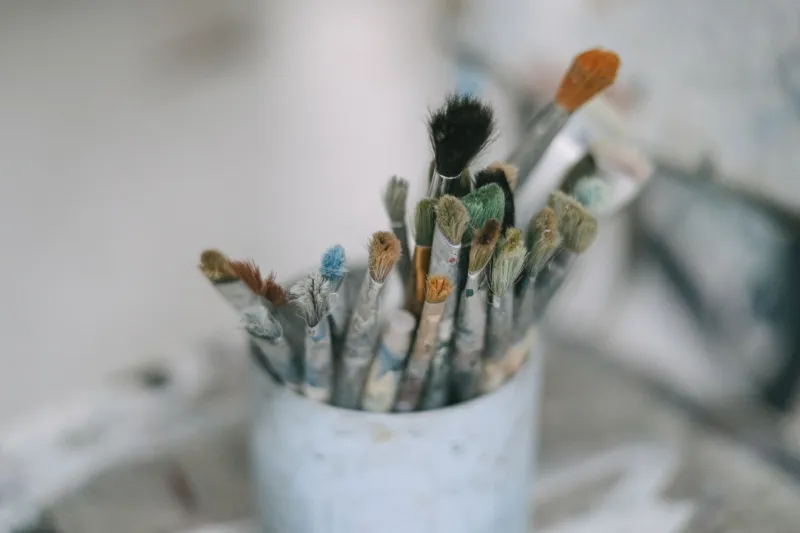
The tools involved range from humble to sophisticated: nail art brushes for fine detail work, Liquitex matte medium for sealing, Mr. Super Clear UV-cut spray (a favorite imported from Japan) for a factory-smooth finish, and in more advanced setups, a full airbrush rig.
Meet the Artists
Jasmine, based in Atlanta, started customizing dolls during the pandemic lockdowns in 2020. She'd been a casual collector for years, but a YouTube tutorial about repainting Monster High dolls sent her down a path she never expected.
"I did my first repaint with dollar-store brushes and craft paint," she says. "It was terrible. But I posted it online and people were so encouraging. That community response kept me going."
Three years later, Jasmine runs a small Etsy shop where her finished customs — primarily Monster High and Ever After High dolls with elaborate fantasy themes — sell for $180 to $450 each. Her waitlist is currently six months long.
On the more technical end of the spectrum is Derek, a graphic designer in Seattle who specializes in realistic portrait dolls. He uses Fashion Royalty and Integrity Toys bases, then spends anywhere from 15 to 60 hours transforming them into hyper-detailed figures with hand-painted freckles, individually applied lashes, and custom-sculpted polymer clay accessories. His pieces start at $800 and he sells primarily through Instagram DMs and at collector conventions.
"People ask me if it's still a hobby at that point," Derek says. "Honestly, it's somewhere between hobby and obsession. The money is nice but it's not why I do it."
The Cost Breakdown Nobody Talks About
One thing beginner customizers often underestimate is the real cost of getting started properly. Here's a realistic breakdown for someone building a basic but functional setup:
- Base doll: $10–$40 (Barbie, Bratz, Monster High, or similar)
- Acetone or Bestine for face removal: $5–$10
- Gesso primer: $8–$15
- Acrylic paints (Golden or Liquitex): $25–$50 for a starter set
- Quality brushes (sizes 0, 00, 000): $15–$30
- Sealant spray (Mr. Super Clear or similar): $15–$25
- Pastels for blushing: $10–$20
All in, a beginner can get started for around $90 to $150. But as the addiction sets in — and it does — costs climb. A decent airbrush setup runs $80 to $200. Quality rerooting fiber costs $15 to $40 per pack. And then there's the time investment, which is genuinely significant.
"People see the price on a finished custom and think it's high," Jasmine says. "Then I tell them I have 35 hours in it and suddenly the math makes sense."
Where Beginners Should Start
The community consensus on this is pretty clear: start cheap, start simple, and don't be precious about your first attempts.
Pick up a few inexpensive fashion dolls from a thrift store or dollar store — these are perfect for practice because there's no financial pressure. Watch tutorials specifically for your doll type, because techniques for vinyl dolls differ from those for hard plastic or resin BJDs (ball-jointed dolls). The YouTube channels of established customizers like Dollightful, NightTerrorsCustoms, and KarolinaZebrowska (who focuses more on historical accuracy but has great technique content) are excellent free resources.
Start with a basic repaint before attempting anything structural. Get comfortable removing factory paint cleanly. Learn to seal properly before moving on — a bad seal ruins a good repaint. And post your work, even when you're not happy with it. The feedback you get from communities like Doll Data Room's forums, Reddit's r/DollCustomization, and dedicated Facebook groups is genuinely invaluable.
Redefining What a Doll Collection Means
Maybe the most interesting thing about the customization movement is what it says about collecting culture more broadly. For generations, the prestige in doll collecting came from finding and preserving originals — factory-perfect, never-played-with, ideally still boxed. Condition was everything. Modification was almost heresy.
Customization flips that entirely. Here, a factory doll is a starting point, not a destination. The value isn't in preservation — it's in transformation. A $15 Barbie becomes a $400 fantasy portrait. A thrift-store Monster High doll becomes a one-of-a-kind art object with a documented creator behind it.
Both approaches coexist in the collector community today, and increasingly, the same person does both. They might have a shelf of mint-condition vintage pieces and a workbench full of dolls mid-transformation. The hobby has expanded to hold all of it.
"I think what we're doing is proving that these objects have more potential than anyone gave them credit for," Derek says. "The factory version is just one version. We're finding all the others."
If you want to see what that looks like in practice — the before-and-afters, the work-in-progress shots, the community critiques — this is exactly the kind of thing the Doll Data Room community lives for. Dive in. The acetone's fine once it dries.