Where Unloved Dolls Go: Inside the Quiet Rescue Economy Nobody Talks About
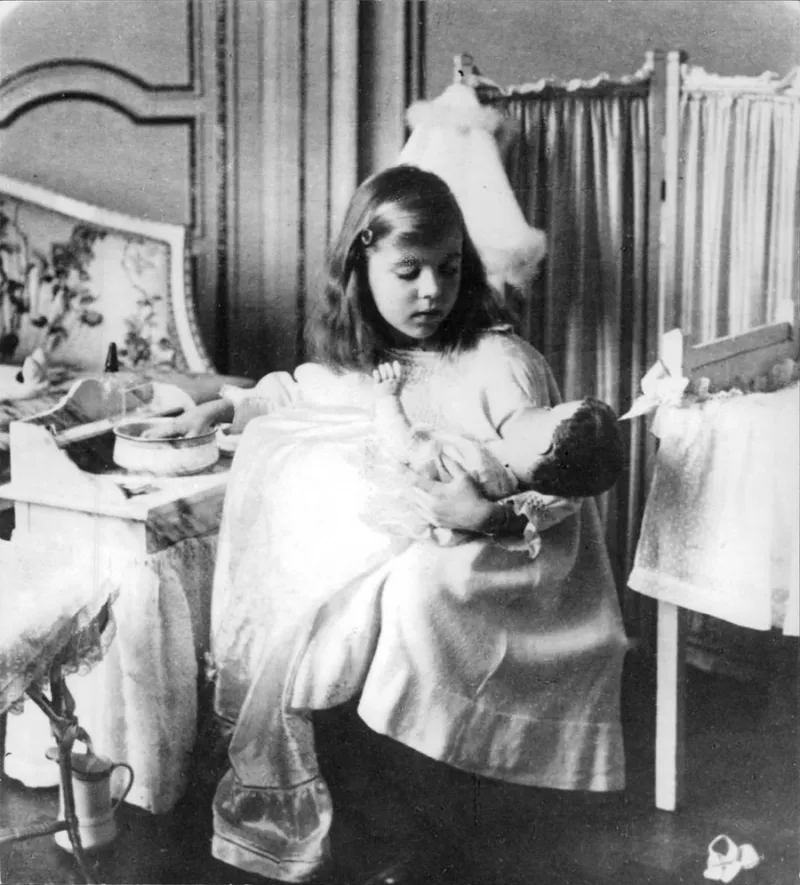
Photo: Unknown photographer, Public domain, via Wikimedia Commons
There's a moment at nearly every estate sale that seasoned doll people know by heart. You round the corner into a back bedroom and there they are: forty years of dolls crammed into cardboard boxes, sun-faded, hair matted, some still in the outfits their original owners picked out in 1978. The price? Whatever the estate company guessed. Often, that's nothing. Sometimes the boxes simply don't sell, and the whole lot ends up on the curb.
That's the unglamorous end of the hobby we rarely photograph for Instagram. And it's happening at a scale that would surprise most collectors.
The Downstream of a Dwindling Hobby
The math is uncomfortable. The generations that bought mass-market dolls in the biggest numbers — the baby boomers and their parents — are now downsizing, moving into assisted living, or passing away. Their collections don't come with instructions. Adult children in Ohio and Arizona open closets, find hundreds of dolls they have no emotional connection to, and do what anyone would do: they call a thrift store, list a vague "huge doll lot" on Facebook Marketplace, or throw them in the dumpster behind the house.
Thrift stores, for their part, are drowning. A volunteer at a Goodwill-style operation in the Midwest put it plainly: dolls are among the hardest donations to move. They take up shelf space, they're frequently dirty, and the average shopper isn't looking for a 1980s Cabbage Patch Kid with a marker mustache. Anything that doesn't sell in a few rotations gets sorted into the salvage stream — baled and sold by the pound to textile recyclers, or worse, landfilled.
The People Catching the Fall
Between the estate sale and the dumpster sits a small, mostly unpaid workforce: doll rescuers. They're the ones who answer "free dolls" listings at 10 p.m., who pull boxes out of garages in July heat, who drive two hours for a lot that's 90 percent junk because the 10 percent might contain something worth saving.
Their operation usually looks nothing like a polished business. It's a spare bedroom with bins labeled by brand, a dehumidifier humming in the corner, and a spreadsheet — or more often, a pile of sticky notes — tracking what came in and where it went. Some rescuers clean and re-home dolls cheaply or for free to new collectors, especially kids, on the theory that a $5 doll with a freshly washed outfit is how the next generation of collectors gets started. Others harvest parts: that ruined doll's head might be exactly what a customizer three states away needs to finish a project.
And then there's the recycling end. A handful of small operations now genuinely break down unloved dolls — separating vinyl, ABS, nylon hair fiber, and polyester stuffing — because sending mixed-material toys to a landfill is the one outcome basically everyone in the hobby agrees is a failure.
Is Rescue a Duty, or Just a Preference?
Here's where the community splits. Ask around at any doll show and you'll hear two camps.
One camp says collecting is personal. You're responsible for the dolls you buy and love, full stop. Nobody signed up to be a welfare system for the entire back catalog of the toy industry. If someone wants to rescue every sad doll at the swap meet, wonderful — but it's a calling, not an obligation.
The other camp points out that collectors benefit enormously from the hobby's history, and history is exactly what's in those boxes. The dolls that document manufacturing changes, fashion trends, the evolution of face molds — a lot of that is being lost not because anyone decided it wasn't worth keeping, but because nobody was standing there when the dumpster was loaded. From that view, the community has a stake in the outcome whether it likes it or not.
Both positions are defensible. What's harder to argue with is the practical middle ground: collectors don't need to adopt every orphaned doll, but they can make the end of the line less catastrophic. A few minutes of effort changes the trajectory.
What Actually Helps
If you've ever wondered what to do when a collection — yours or a relative's — needs to move on, the rescuers have a short list:
- Sort before you donate. Pull out anything identifiable, damaged-but-rare, or complete in box. A five-minute check can save a doll worth real money from the fifty-cent bin.
- Offer lots to the community first. Local doll clubs, Facebook collector groups, and forums like this one will frequently take whole estates off your hands, often covering pickup themselves.
- Be honest in listings. "Vintage doll lot, mostly played-with condition" gets takers. "Antique collection, must be worth a fortune" gets silence and eventually a dumpster.
- Ask the thrift store questions. Some chains have salvage partnerships; a few will set dolls aside for hobby groups if you ask. Most won't — but the ask costs nothing.
- Document what you can. Even phone photos of an estate's contents help rescuers and historians know what existed, even after it's gone.
The Shelf You Leave Behind
Every collector eventually becomes the back bedroom. The boxes, the dust, the next generation's shrug. It's not a fun thought, and nobody's asking you to dwell on it — but the rescuers working the thrift bins every weekend would tell you the same thing: the dolls don't get a vote. We do.
And the difference between a doll that gets a second life and one that gets baled for salvage is usually just one person who cared enough to make a phone call.