Unlocking the Door: What Happens to You and Your Collection When You Finally Let Someone In
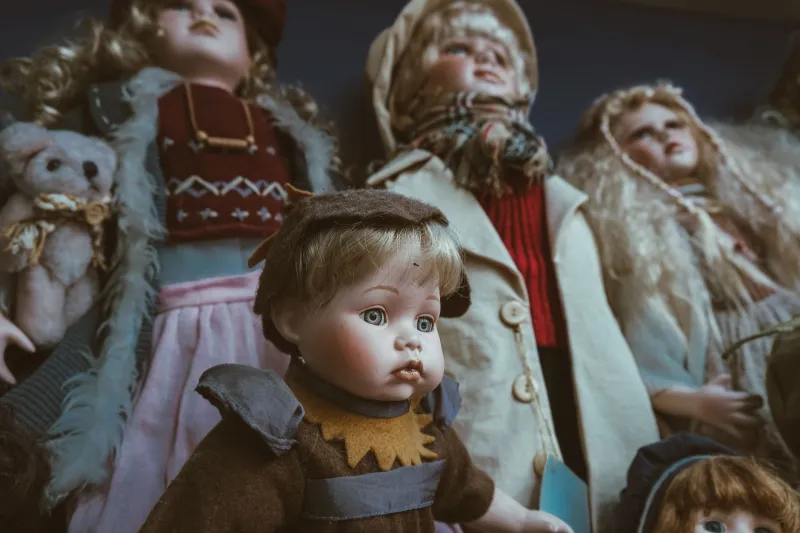
For a lot of collectors, the doll room is the most honest space in the house. No performance, no explanation required. Just shelves of carefully arranged figures, a system that makes sense to exactly one person, and the particular quiet that comes from being surrounded by things you genuinely love.
So when someone asks to see it — really see it, not just poke their head in — the reaction is almost never simple.
The Private Logic of a Solo Collection
Collecting in isolation has its own rhythm. You make decisions without committee. You develop personal taxonomies — by era, by character, by the specific way a face-up catches afternoon light — and nobody challenges them. The collection becomes a kind of extended self-portrait, and like most self-portraits, it's not necessarily meant for public display.
That privacy isn't always about secrecy. Plenty of collectors are perfectly open about their hobby in conversation. But there's a meaningful difference between mentioning you collect dolls and showing someone your room. One is an abstract fact. The other is an invitation into something personal.
This is why the transition from solo hobbyist to community participant tends to feel bigger than it looks on paper.
What the Fear Is Actually About
Ask collectors what holds them back from sharing their space — whether in person or through photos online — and you'll hear variations on the same few themes.
There's the obvious stuff: worry about judgment, concern that someone won't understand why a shelf of fashion dolls from the early 2000s constitutes a serious collection. But dig a little deeper and something more interesting comes up. A lot of collectors describe a fear that the act of showing will somehow change the collection itself. That once it's been seen and evaluated by outside eyes, it stops being fully theirs.
That's not a small fear, and it's worth taking seriously. Collections that live in private develop a kind of internal logic that's deeply tied to the collector's own history and preferences. Bringing in an audience — even a friendly, knowledgeable one — introduces a new variable. You start seeing things through their eyes, at least a little. And that can feel like a loss before it starts to feel like anything else.
The Shift That Actually Happens
Here's what experienced community members tend to report, though: the fear and the reality don't match up very well.
The most common outcome of sharing a collection — whether with a fellow enthusiast at a swap meet, a family member who finally asked the right questions, or an online audience through a forum post or social share — is a deepening of attachment, not a dilution of it.
When you explain why a piece matters to you, you often figure out why it matters more clearly than you did before. When someone asks how you found something, you tell the story and the object picks up narrative weight it didn't have when it was just sitting on a shelf. When a fellow collector reacts with genuine recognition — oh, I know exactly what that line is, I've been looking for that variant for years — the piece becomes part of a shared language instead of a private one.
That's not nothing. That's actually a significant part of what makes collecting meaningful over the long haul.
Family First, Community Second
For many collectors, the first real test isn't the online community — it's the people already in the house.
Sharing a collection with family members who don't collect comes with its own specific dynamics. A partner who's been politely tolerant of the hobby for years might respond very differently to a genuine tour than to the occasional mention of a new acquisition. Kids might engage in ways that feel either delightful or alarming, depending on their age and your display setup.
Collectors who've navigated this well tend to say the same thing: context matters enormously. Walking someone through the room with some explanation of what you're looking at — why this piece is significant, what the hunt for it looked like, what makes it different from the one next to it — transforms the experience from "a lot of dolls" to something that makes sense as a collection. Most people, given the right entry point, can find genuine interest in almost anything.
And that moment of connection — when someone who's never cared about dolls suddenly gets it, even a little — tends to be one collectors remember for a long time.
Going Public Online
The online version of this transition has its own texture. Posting photos of your collection to a forum or community platform like a doll enthusiast group introduces you to an audience that already speaks your language, which removes some of the vulnerability but adds different stakes.
Other collectors notice things. They'll spot the variant you didn't know was rare. They'll ask about the condition of a piece in a way that makes you look at it more critically. They'll also, frequently, share their own stories in response — which is where the real community building happens.
Collectors who've made the jump from lurker to active poster consistently describe the experience as expanding their relationship to the hobby rather than complicating it. Suddenly the collection has context. It sits inside a larger conversation about the hobby's history, its market, its culture. That context, it turns out, makes the whole thing more interesting — not less.
What You Get Back
The exchange isn't just emotional. Sharing a collection tends to produce practical returns too.
Other collectors know things you don't. They've seen more pieces, tracked more sales, noticed more patterns. Opening your collection to that knowledge base — even informally, through community conversation — is one of the most efficient ways to get smarter about what you own and what it's worth.
Authentication help, valuation feedback, leads on missing pieces, warnings about known fakes in a particular line — all of this flows more naturally once you're a visible, participating member of a community rather than someone collecting in a sealed room.
The data improves when it's shared. That's true of markets, and it's true of collections.
The Room Doesn't Change. You Do.
Here's the thing that tends to surprise collectors most: the room looks the same after someone's been in it. The shelves are where they were. The pieces haven't moved.
But something has shifted. You've seen your own collection through another person's eyes, and you can't entirely unsee it. For most collectors, that's not a loss — it's an expansion. The collection becomes something that exists in relationship to other people, other histories, other passions.
And that, in the end, is what a hobby is supposed to do. Not just fill space on a shelf, but fill space in a life — and maybe, eventually, in a community.
The door's worth opening. Most people who open it are glad they did.