If It's Not Online, Did It Ever Exist? How Digital Archives Are Rewriting Doll History
There's a 1987 regional department store exclusive sitting in a plastic bin somewhere in rural Ohio. No catalog page. No forum post. No Instagram reel. Just a doll that exists in the memory of maybe a dozen people who bought her at a now-defunct retailer during a holiday sale that nobody thought to photograph.
For most of doll collecting history, that was totally normal. Gaps were part of the landscape. You learned things from the person at the next table over at a doll show, or from a xeroxed newsletter that got passed around a club meeting. Knowledge lived in people, not servers.
That's changing fast — and the shift is bigger than most collectors realize.
The Archive Is Being Built Whether You're Helping or Not
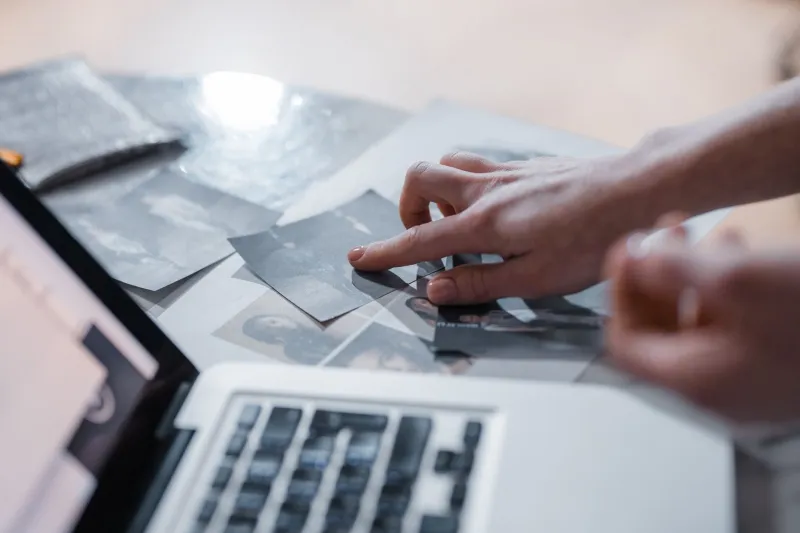
Right now, thousands of collectors are uploading photos, writing condition notes, cross-referencing production years, and tagging doll lines across platforms ranging from dedicated fan wikis to casual Instagram grids to structured community databases. Some of it is organized and intentional. A lot of it is just someone snapping a picture of a thrift store find before they flip it.
But here's the thing: all of that activity adds up. Search engines index it. Algorithms surface it. And over time, the dolls that show up repeatedly in those searches start to carry more cultural weight than the ones that don't.
"I've watched certain lines go from 'nobody talks about these' to suddenly being on every want list," says one collector who's been active in online communities for over fifteen years and maintains a personal database of more than 2,000 documented pieces. "And a big part of that shift is just... someone posted good photos. Someone wrote a solid description. Suddenly the doll has a story people can find."
That's the archive effect in action. Documentation doesn't just preserve history — it actively shapes which history feels worth caring about.
Who Gets to Be the Archivist?
The old gatekeepers of doll knowledge were authors, museum curators, and the publishers of official price guides. They decided what got documented, what got a chapter, what got appraised. The barriers were real: you needed access, credentials, a publisher, or at minimum a mailing list.
Online communities have blown most of that open. Today, a 22-year-old collector in Phoenix with a good eye and a methodical approach can build a reference resource that rivals anything produced by a traditional institution — and in some cases, surpasses it.
That's genuinely exciting. Collectors who were always excluded from the "official" conversation — people focused on Black doll history, for example, or regional and international lines that US-centric guides consistently ignored — now have platforms to document what they know. Community-built archives have surfaced entire categories of dolls that the mainstream collector market barely acknowledged for decades.
But the democratization story has a catch.
"The internet doesn't actually treat everything equally," notes a collector and informal archivist who focuses on mid-century American play dolls. "What gets found is what gets linked to, shared, and engaged with. And that still reflects biases — about what's considered beautiful, collectible, or worth the effort of documentation."
In other words, the algorithm has opinions. And those opinions can quietly reinforce old hierarchies even while appearing to dismantle them.
Discoverability Is the New Rarity
Here's where things get genuinely complicated for collectors trying to assess value.
For most of doll collecting history, rarity was a fairly straightforward concept: fewer units produced meant harder to find meant higher value. That logic still holds. But a new variable has entered the equation — discoverability.
A doll that was produced in limited numbers but has been extensively documented online, photographed from every angle, and discussed across multiple platforms is now findable in a way it never was before. Buyers know it exists. They know what to look for. They know what to pay.
Meanwhile, that Ohio department store exclusive from 1987? It might be genuinely rare. But if it's not in any database, not tagged in any post, not mentioned in any forum thread, it effectively doesn't exist in the market. It can't command the price it might deserve because buyers can't research it, can't verify it, and can't be confident they're not being misled about what it is.
"I've seen pieces sell for almost nothing at estate sales that should have gone for real money," says one dealer who works primarily in vintage and discontinued lines. "The seller didn't know what they had. The buyers at the sale didn't know either. If that doll had a Wikipedia entry, the whole transaction would have gone differently."
This creates an interesting opportunity — and a real responsibility — for collectors who do the archival work.
Building the Record vs. Building the Hype
Not everyone is comfortable with the blurry line between documentation and promotion.
When a collector builds out a thorough, well-sourced archive entry for a doll line they happen to own a lot of, is that preservation or market manipulation? When a customizer posts extensively about a base doll model they favor, driving up demand for that mold, is that community contribution or self-interest?
Most of the time, the answer is probably both — and that's not necessarily sinister. Enthusiasts document what they love. Love and financial interest often overlap. That's been true of every collecting hobby forever.
The more meaningful question is whether the community is building archives that are accurate and inclusive, or just building archives that reflect what's already popular.
"I try to document the weird stuff, the overlooked stuff," says the collector who maintains that 2,000-piece database. "Not because I think it'll become valuable. Just because if I don't write it down, nobody will. And then it's like it never happened."
That impulse — to rescue the undocumented from obscurity — might be the most important thing the digital collecting community can cultivate. Not every archived doll needs to become a hot commodity. Sometimes the point is just making sure the record exists.
What This Means for Your Collection
If you're a collector trying to navigate this landscape, a few things are worth keeping in mind.
First, documentation you contribute matters. A thorough post, a well-tagged photo, a forum thread where you share what you know — all of that feeds the archive. You're not just sharing; you're building infrastructure that future collectors will rely on.
Second, gaps in the record are not the same as gaps in value. That undocumented piece might be exactly what someone's been searching for — they just don't know how to look for it yet. If you suspect something is underrepresented online, do a little digging before you assume it's obscure because it's unimportant.
And third, approach community databases with the same healthy skepticism you'd bring to any source. They're built by humans with perspectives, preferences, and sometimes financial stakes. Cross-reference. Ask questions. Add what you know.
The archive is a living thing. It's only as good as the people building it — which, in this community, means it's only as good as us.